
Getting Back Into Exercise After Years Off: How to Start Again Without Hurting Yourself
Getting back into exercise after years off is mostly about starting smaller than you think. Here is what week one should look like.
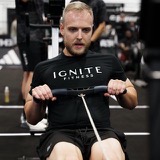 By Luke Robinson, personal trainer in Cuckfield · 8 min read
Two things stop people getting back into exercise after a long break. The first is a fear of hurting themselves. The second, which almost nobody says out loud, is the fear of looking stupid in front of people who know what they are doing. Both are reasonable. Both have the same solution, which is to start much smaller than you think you should.
Most of the people I train have had a gap. Sometimes five years, sometimes twenty. Children arrived, work got heavier, an injury happened and the habit never came back. That is the normal starting point, not an embarrassing exception, and it is a much easier problem to solve than people assume.
The mistake almost everybody makes in week one
People restart at the level they left off. You remember what you used to run, or lift, or how long you lasted in a class, and that number quietly becomes the target for day one. It is the most reliable way there is to hurt yourself, or to be too sore to train again for a fortnight.
Your heart and lungs come back reasonably quickly. Muscles are not far behind. Tendons, ligaments and joints are slower, and they give you no warning until they are already unhappy. That mismatch is the whole story behind most comeback injuries. The engine restarts before the chassis is ready for it.
So the rule for the first month is that you should finish every session feeling like you could have done more. Not a bit more. Comfortably more. That is not undertraining. It is buying yourself eight uninterrupted weeks, which is what actually builds something.
What week one should actually look like
Two sessions, thirty to forty minutes each, with at least a day between them. Nothing taken to failure, nothing that leaves you unable to get down the stairs. Something like this:
- Five to ten minutes of easy movement to warm up: walking, a bike, some gentle joint work. Enough to break the lightest sweat
- One lower body push, such as a box squat or standing up out of a chair without using your hands. Two or three sets of eight to ten, at a load where the last rep is clearly not the last one in you
- One upper body push, such as a press up against a wall or a bench, or a dumbbell press
- One pull, such as a single arm dumbbell row or a band row
- One hinge, such as a hip bridge or a very light Romanian deadlift, taught properly before any weight goes on it
- Something for the middle, such as a dead bug or a plank you can hold with good form
- Five minutes of easy walking at the end
That is the whole session. It looks unimpressive written down, and that is deliberate. Do that twice a week for four weeks and then add a little, and you will be in a far better place in three months than somebody who did an hour of everything on day one and then went quiet.
Between sessions, walk. Walking is the most underrated thing available to somebody restarting. It costs almost nothing in recovery, it rebuilds a base, and it fits into a day that is already full.
Soreness: what is normal and what is not
Some soreness after the first few sessions is expected. It typically appears the day after, is at its worst a day or two in, and eases off over the following few days. It is usually worse after anything with a lot of lowering under load, and it settles down a great deal once your body has seen the movement a few times.
What is not normal: sharp pain during a movement, pain in a joint rather than in a muscle, anything that gets worse over several days instead of better, swelling, or soreness so severe you cannot straighten your arms or lower yourself onto a chair. That last one is not a badge of honour. It means the dose was far too high, and on rare occasions it can point to something that needs medical attention, so see a GP if it is severe or if your urine turns unusually dark.
If something hurts, stop doing that particular thing and tell your coach. A decent coach will find another way to train the same pattern rather than telling you to push through it. There is nearly always another way.
Forget whoever you were at 25
That is what the free consultation is for. We talk through your goal, your history and what would realistically fit your week.
This one is more psychological than physical, and it derails more comebacks than any injury does. If your reference point is the fittest you have ever been, then every session in the first year is a disappointment. You will feel slow, weak and slightly humiliated, and eventually you will stop, because nobody keeps doing a thing that makes them feel like that.
The only useful comparison is with yourself last month. Are you lifting a bit more than four weeks ago? Do the stairs feel different? Did you get through the session more easily? That is the scoreboard. The version of you from twenty years ago is not competing and does not need beating.
It also helps to remember that the fitness you had back then was built over years, usually with far more free time and far fewer people depending on you. It was never a fair benchmark. Letting go of it is a relief rather than a defeat.
Where restarts usually go wrong
- Doing your old routine. The programme that worked when you trained four times a week is not a beginner programme, even though you do not feel like a beginner
- Going straight to running. Running is a poor first choice for somebody who has been sitting down for years, because it loads the joints hard from the first minute. Build some strength first and running becomes far more comfortable when you come back to it
- All or nothing. Deciding to train five times a week, give up alcohol, meal prep on Sundays and get up at five, all starting Monday. One thing slips, the whole structure comes down, and you conclude you lack discipline. You do not. The plan was badly designed
- Training through pain, especially old injuries. Get them looked at, work around them, do not simply hope
- Comparing yourself to the room. Everybody in a gym is thinking about themselves. The person you are worried about judging you is busy worrying about being judged
A sensible shape for the first eight weeks
Weeks one and two: two short full body sessions and a walk most days. Learn the movements. Keep the weights genuinely easy. Expect some soreness after the first session and noticeably less by the fourth.
Weeks three and four: the same sessions with slightly more weight, or one extra set. This is where motivation dips and nothing visible has changed yet. Turn up anyway. It is the most important fortnight of the whole thing, and almost everybody who quits does it here.
Weeks five to eight: add a third session if the diary allows, or add a little more work to the two you already have. Start pushing harder on the main lifts now that your joints have had a month to catch up. By the end of week eight most people notice clothes fitting differently and everyday tasks feeling easier.
Then keep going. That really is the entire secret, and it is why I would rather somebody trained twice a week for a year than five times a week for a month. There is more on how I structure the early weeks in the way I run coaching.
Do you need to see a doctor first
If you are managing a health condition, taking medication for your blood pressure or your heart, pregnant or recently postnatal, recovering from surgery, or you get chest pain, unusual breathlessness or dizziness when you exert yourself, speak to your GP before you start. Take the answer seriously and pass it on to whoever is coaching you. It makes the plan better rather than more restricted.
For most healthy adults restarting sensibly, that conversation is not necessary. If you are unsure, have it anyway. It costs one appointment.
The kit you actually need
Trainers that fit and are not fifteen years old. Clothes you can move in and do not feel self conscious in. That is it. You do not need a watch that scores your recovery, a cupboard of supplements or a gym membership you will use twice. Buying things is a very effective way of feeling like you have started without actually starting.
The first session is the hardest one
The first session is the worst, and it is not because of the exercise. It is the walking in. After that it gets steadily easier, and within about a month it stops being a decision you have to make each time. It becomes a thing that is already in the diary.
I train people one to one from a private setup in Cuckfield, which for a lot of people coming back after a long break matters more than anything else on this page. No busy gym floor, nobody watching, nothing to feel self conscious about. Haywards Heath is around five minutes away and Balcombe about ten, so it is a short trip from either. If you would like to talk it through, the first step is a free consultation with no obligation. You can get in touch here, and there are more practical details on training in Cuckfield if you would rather read first.
Training in Cuckfield, Haywards Heath or Balcombe? Book a free consultation and I will give you a straight answer about what would work for you.
Book your free consultation